Ancient Minds, Modern Parasites: Decoding the Nippur Clay Tablet
How a 4,000-year-old Sumerian catalog predicted modern psychological distress through the lens of mental 'parasites'.
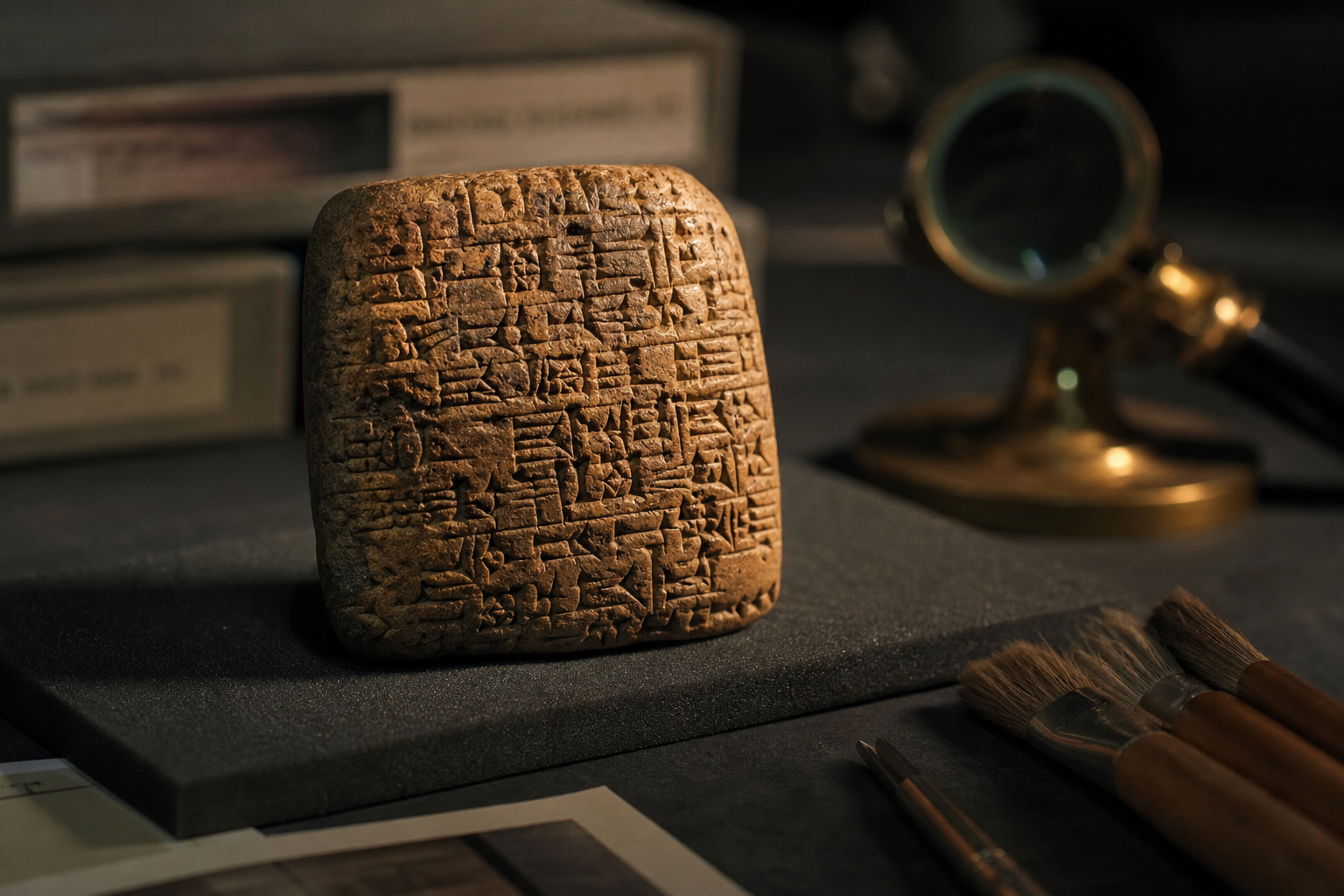
In 1924, amidst the ruins of Nippur in southern Iraq, a British archaeological team unearthed a small clay tablet encased in bitumen and sealed by hand. Palm-sized and unassuming, it was sent to London for translation. The first scholar to attempt a reading stopped after only twelve lines, reportedly noting that the content was "too disturbing" to continue. Misclassified as a mundane agricultural inventory, the artifact gathered dust in storage for nearly a century. It wasn't until 2019 that a doctoral student in Berlin requested the tablet for a routine study on Sumerian grain records. She quickly realized the tablet had nothing to do with barley or livestock. Instead, it was a precise catalog of something far more elusive: the internal architecture of human suffering. The Sumerians believed that consciousness was not a closed system, but a landscape subject to "traffic." They identified twelve specific entities—described using a term best translated as "parasite"—that attach themselves to human awareness. This 4,000-year-old text offers a startlingly modern psychological map. Long before the advent of neuroscience or clinical psychology, the Sumerians were documenting patterns of anxiety, rumination, and ego-dissolution that we grapple with today. To the Sumerians, these were not necessarily supernatural demons, but intelligent, patient presences that fed on the host’s vitality.
Sources: https://www.youtube.com/watch?v=ymAdLpX-AUE&list=WL&index=5&t=527s