Epstein, Sitchin, and the Anunnaki: A Quest for Ancient Power
Uncovering the intersection of Jeffrey Epstein’s obsession with sacred relics, genetic legacy, and the ancient astronaut theories of Zechariah Sitchin.
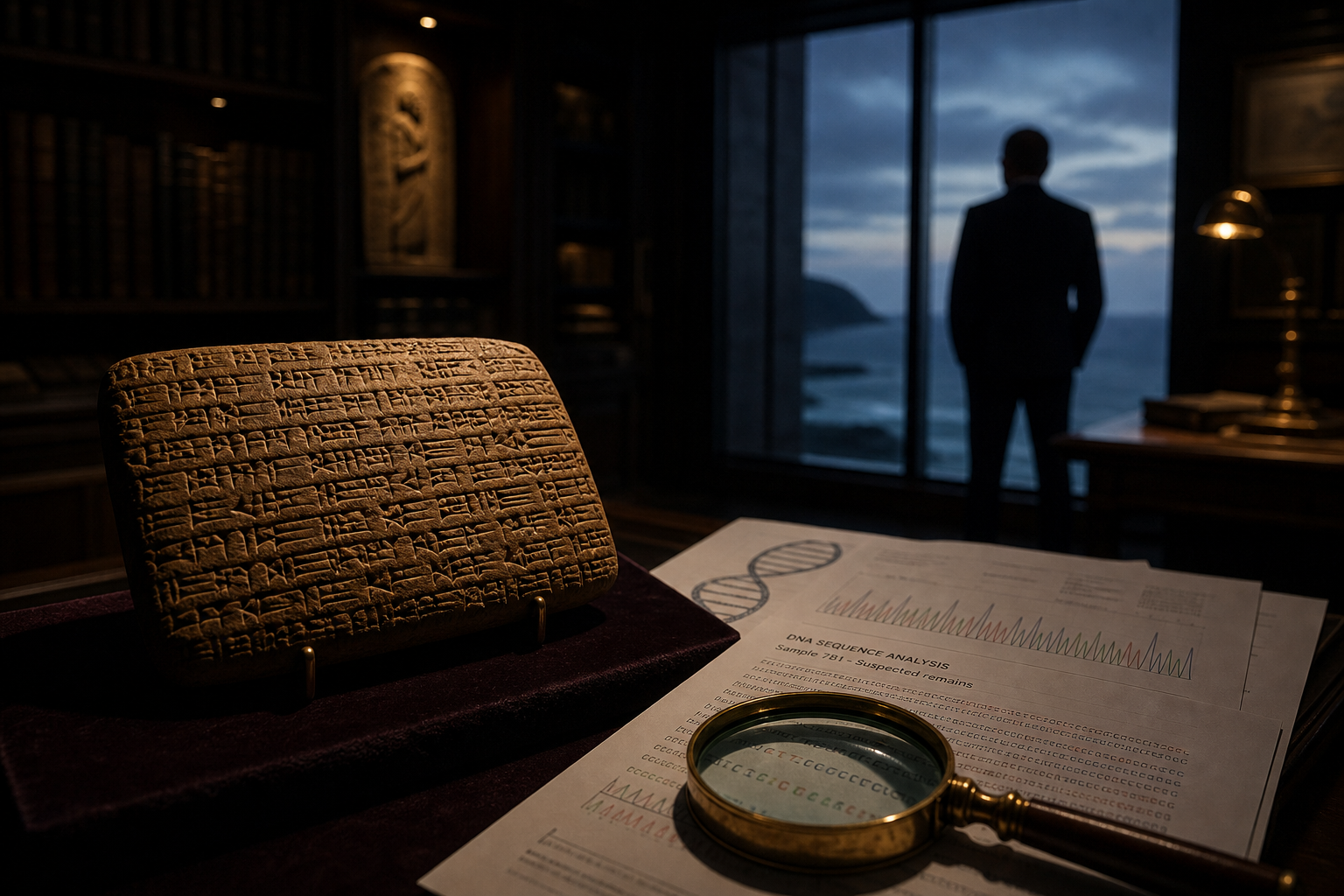
In March 2017, a shipping crate arriving in Palm Beach, Florida, carried a peculiar cargo. Labeled simply as "Artwork from Saudi Arabia," the invoice listed a price of $10,980 for three pieces of the *Kiswah*—the sacred black silk cloth that drapes the Kaaba in Mecca. The seller’s pitch was not based on the fabric’s weave or its aesthetic value, but on its spiritual saturation: "People touch it and pray with their hands on it. Millions every year." The buyer was Jeffrey Epstein. The crate did not stay in Florida; it was forwarded to Little St. James, his private island in the U.S. Virgin Islands. This was not an isolated acquisition. For decades, Epstein had been quietly amassing a collection of objects that were less about art and more about "charge." From petroglyph rocks moved to his New Mexico ranch house to a massive Persian rug purportedly sourced from a mosque, Epstein appeared to be building a repository of the sacred. In May 2010, just months before the author’s death, Epstein’s scheduler frantically attempted to arrange a meeting between Epstein and Zechariah Sitchin, the father of the ancient astronaut hypothesis. This intersection—between a man obsessed with genetic legacy and the world’s most famous proponent of extraterrestrial bloodlines—reveals a specific, calculated quest for power that transcends mere wealth.
Sources: https://www.youtube.com/watch?v=m0wqs4am9DA&list=WL&index=1