The Enoch Inversion: Why the Oldest Manuscripts Contradict the Rapture Doctrine
Discovering the ancient manuscript evidence that suggests 200 years of church teaching has the direction of divine judgment backward.
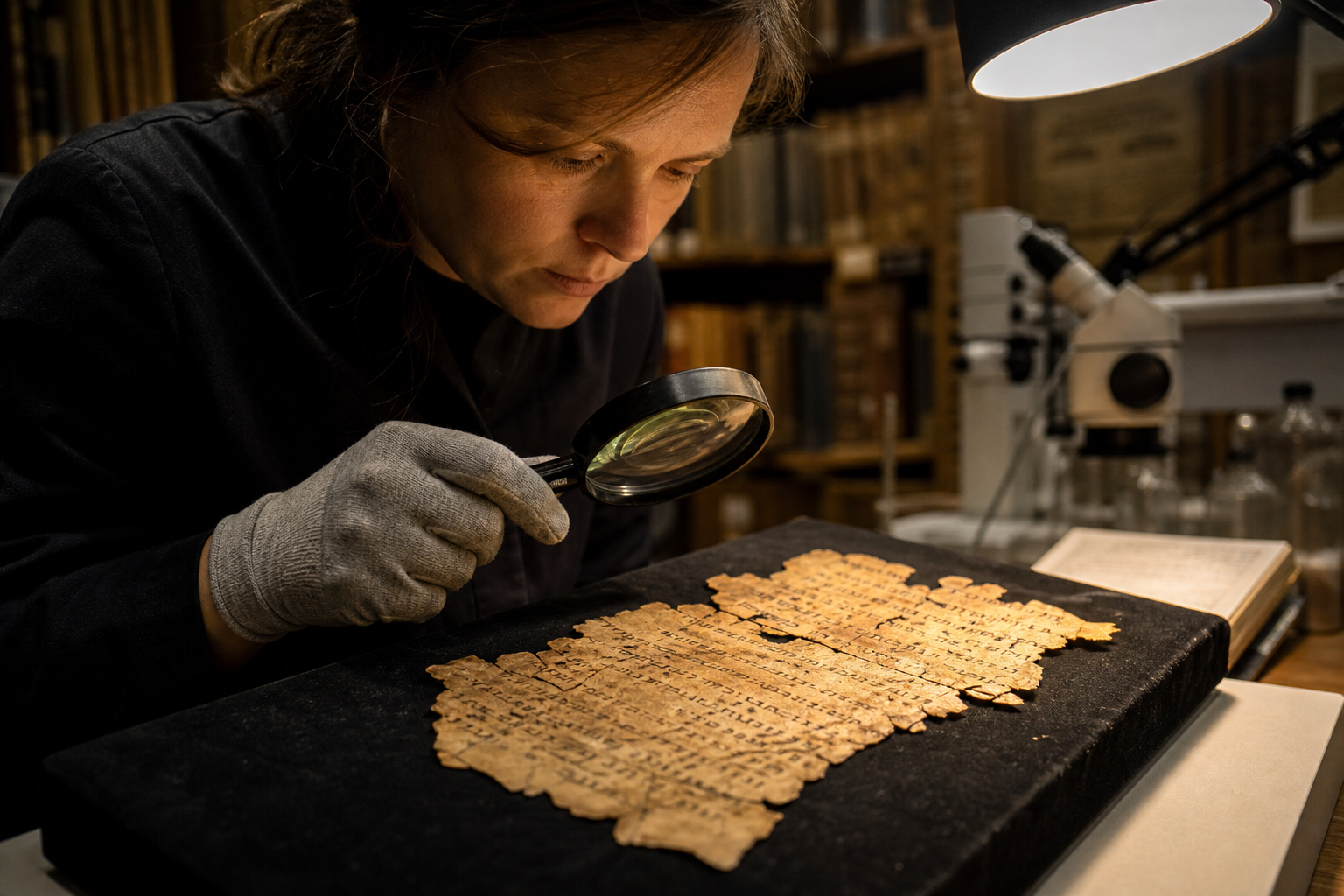
The doctrine of the "Rapture"—the belief that the righteous will be vacuumed off the surface of the earth to escape a period of global tribulation—has become so embedded in Western evangelical thought that it is often treated as foundational. Yet, for nearly 1,800 years, this concept was virtually non-existent in the Christian tradition. The prevailing understanding of the end of the age was not one of escape, but of inheritance. Within the vaults of the Israel Museum and the ancient archives of Ethiopia lies a paper trail that points to a monumental structural inversion. The oldest manuscripts of the Book of Enoch, a text quoted by the New Testament but later sidelined by Western councils, suggest that modern theology has the direction of divine judgment backward. In the original Enochian framework, the righteous are not the ones who leave; they are the ones who stay. Grounding this shift is fragment 4Q204, a 9.2 cm wide piece of parchment excavated from Qumran Cave 4 in 1952. Untouched by ungloved hands for seventy years, this Aramaic witness, alongside the unbroken liturgical tradition of the Ethiopian Orthodox Church, provides a legal and linguistic blueprint for an event that looks less like an evacuation and more like a civic restoration.